Great Albums Recorded at HomeAre you one of those who record at home with consumer-grade multitrack recorders? Have you ever considered that some famous albums were made this way—sometimes even without a professional studio at all? From legendary cassette Portastudios to modern portable digital devices like Roland or Boss recorders, home recording has given birth to unforgettable works. In this article, we’ll explore some of those albums and how they were truly made.
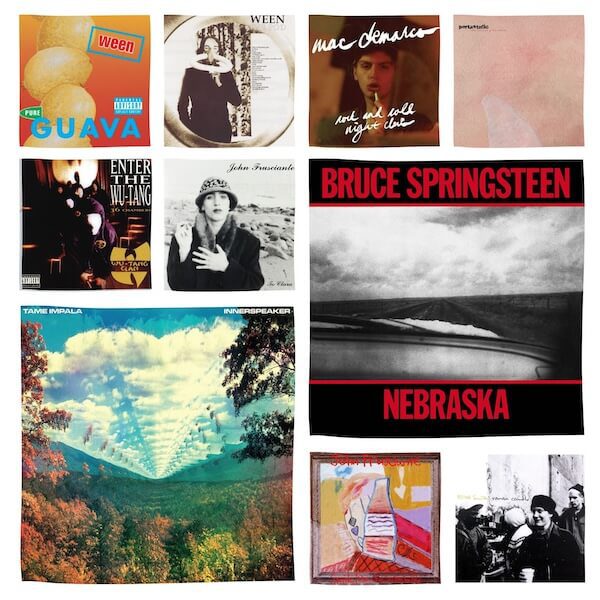
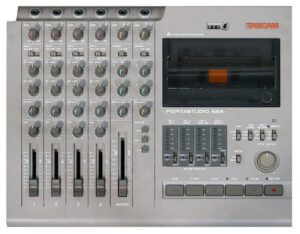
Cassette Multitracks: Legendary ClassicsIn the ’80s and ’90s, home recording flourished thanks to cassette-based multitrack recorders. Artists like Bruce Springsteen with Nebraska, Ween with The Pod and Pure Guava, and Elliott Smith with Roman Candle used 4‑track Portastudio-type recorders to capture their entire albums in a home environment. Even John Frusciante recorded his early material (Niandra LaDes and Usually Just a T-Shirt and Smile From the Streets You Hold) solely on a Tascam 424 Portastudio before releasing them commercially.
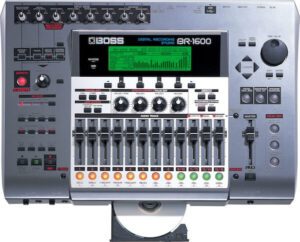
Mac DeMarco, on Rock and Roll Night Club, embraced the lo-fi character of the Tascam 244 Portastudio (and a Fostex VF-80 digital recorder) to write and produce the entire album himself. Naturally, independent artists have often made the most of this technology. For example, Deerhoof’s album Halfbird was recorded using a broken Portastudio, with minimal post-production done at home. Digital Multitracks: Computer-Free and CapableWith the turn of the century came digital standalone recorders capable of producing entire albums without a computer. Kevin Parker of Tame Impala recorded and mixed Innerspeaker entirely on a Boss BR‑1600, using it as a complete all-in-one studio.
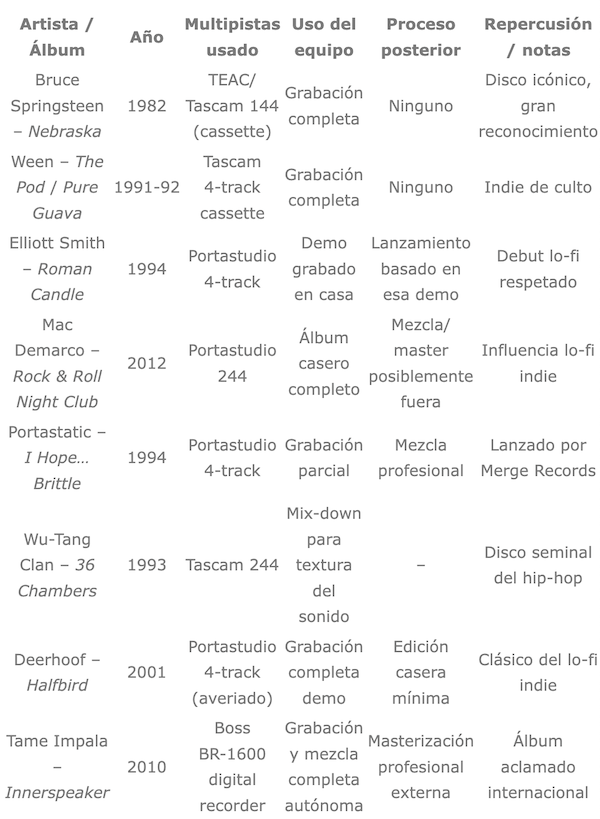
Another notable case is the Roland VS‑1680, often used for professional or semi-professional recordings. For instance, Portastatic used it to mix parts of Summer of the Shark—a mix of home and studio techniques. And once again, independent artists have leveraged digital multitrack hardware to build full discographies. Tendon Levey, for example, has been using Fostex digital recorders for years to track his releases entirely without a computer. Albums Where Home Multitracks Played a Key RoleIn many cases, home multitrack recorders didn’t drive the entire process, but played an essential role in certain phases. As previously mentioned, Portastatic recorded some tracks for other albums on a 4‑track Portastudio and then took those recordings to a professional studio for mixing and mastering. Similarly, Wu‑Tang Clan famously mixed parts of Enter the Wu‑Tang (36 Chambers) using a Tascam 244, after the main sessions, to give the album a raw, gritty sound. In most cases, home recorders weren’t the final step. Springsteen’s Nebraska is an exception—it was released directly from the demo cassette with no studio overdubs. More often, as with Portastatic or Wu‑Tang, the recordings were enhanced or finalized in a professional studio while preserving the DIY spirit. Summary TableBelow is a table summarizing the albums mentioned above, along with a few details about the gear used and the album’s reception:
ConclusionHistory proves that making a record at home—with limited gear, either for the full album or just part of the process—is not only possible but can yield brilliant results. Whether using cassette-based or portable digital multitracks, many records have reached professional quality—especially when later mixed or mastered in a studio setting. So, if you’re recording from home: you, too, can reach an artistic level comparable to major studio productions! References: https://en.wikipedia.org/wiki/Portastudio https://www.gearnews.com/ https://tapeop.com/interviews/76/ https://equipboard.com/c/digital/fostex https://www.sweetwater.com/insync/ https://deerhoof.bandcamp.com/album/ https://www.hifiengine.com/manual_library/ https://www.boss.info/es-es/products/
This article was developed with the assistance of AI for research and initial drafting. Final editing and selection of examples by Juan Ramón Repullés. |
Discounts, offers and news If you want to receive by email articles like these and information on news and offers from this site, subscribe to the mailing list Further articles The music studio online. Online music production The choice of the audio interface |
||||||||||||||||||||||||||||||||||||||||||||||||||||||
| ← Previous article There is no new article |
Discounts, offers and news
If you want to receive by email articles like these and information on news and offers from this site, subscribe to the mailing list
Further articles
The music studio online. Online music production
The choice of the audio interface


 Designed by: Juan Ramón Repullés
Mailing list
Privacy policy